Matcha vs coffee: which do you actually want?
Both have caffeine. Both are drinks people build days around. The differences are more useful than most posts explain.
Both have caffeine. Both are drinks people build days around. The differences are more useful than most posts explain.
1128 Broadway, Bushwick · Open daily 8 AM – 5 PM
Coffee for peak focus in a 2-hour block. Matcha for calm sustained alertness over 4 hours. Coffee gives a sharper energy spike with a crash; matcha's caffeine pairs with L-theanine for smoother, longer alertness with no dip. Coffee has more caffeine per serving (~95mg drip vs ~70mg matcha). Matcha has more antioxidants per serving. Neither is 'better', they solve different problems.
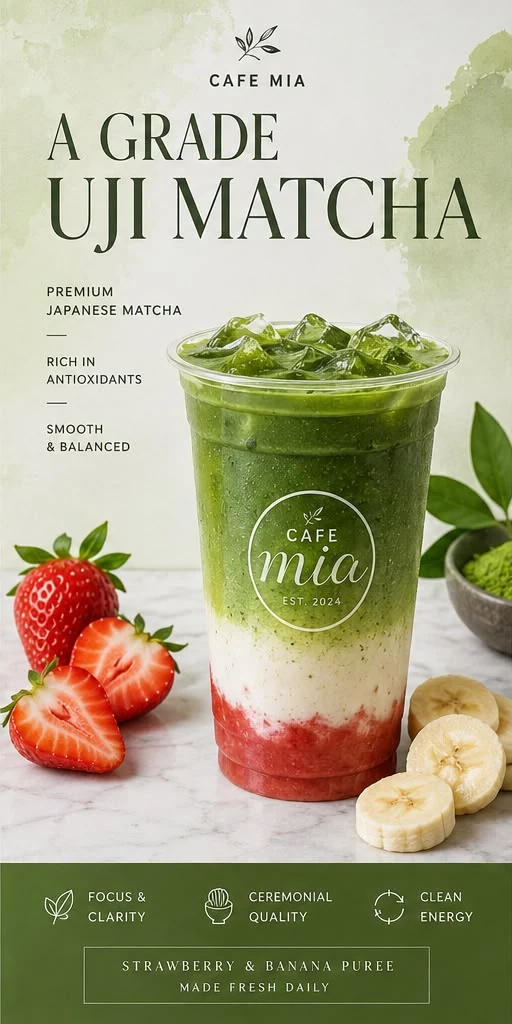
A standard 8oz drip coffee has around 95mg caffeine. An 8oz espresso-based drink (like a latte or cappuccino) has ~65mg from one shot. A 12oz matcha latte at Café Mia (4g of ceremonial matcha) has ~70mg. Cold brew is the outlier, a 12oz can hit 200mg because the extended steep pulls more caffeine. So if raw caffeine is your only concern, cold brew wins. But 'more caffeine' isn't the same as 'more effective energy.'
Matcha contains L-theanine, an amino acid that coffee doesn't have. L-theanine binds to the same brain receptors as caffeine and modulates its effects. Result: the same 70mg of caffeine feels calmer and lasts longer in matcha than in coffee. There's no jitter, no anxiety spike, and no post-caffeine crash. This is why matcha is popular among people who love coffee but don't love the jitter, same alertness, different feel.
Coffee's energy curve is sharp: peak around 30-45 minutes after drinking, plateau for another 60-90 minutes, then a noticeable dip. Matcha's curve is gentler: slower onset, plateau lasts 3-4 hours, minimal dip. If you're doing a 90-minute focused sprint, coffee is fine. If you're working a 4-hour block, matcha holds you steadier.
A-Grade Uji matcha, 4g dose, whisked fresh with oat milk over large-cube ice. Our #1 seller.
Real dragonfruit puree layered with A-Grade Uji matcha. Naturally sweet, vividly pink.
Fresh-squeezed lemonade meets whisked Uji matcha. Summer bestseller.
Coffee at a specialty cafe is fast, an espresso is pulled in 25 seconds. Ceremonial matcha requires sifting, whisking with a chasen, and about 90 seconds of active preparation per drink. Neither is 'better,' but the difference matters if you're grabbing something in a rush (coffee) vs. enjoying the drink as a ritual (matcha).
Both do, but matcha genuinely shines iced. Cold mutes matcha's slight bitterness and lets the natural sweetness lead. Iced coffee retains most of coffee's flavor profile but can taste watered down. For summer, iced matcha or cold brew are the two strongest options; iced pour-over is fine but not remarkable.
Matcha has more antioxidants per serving, you're drinking the whole tea leaf as powder, not just steeping. Coffee has some health signals too (associated with reduced cognitive decline, some cardiovascular benefits). Neither is a health drink at scale. Both are enjoyable drinks that happen to also be caffeine delivery vehicles.
Morning wake-up in a rush: drip coffee. Morning wake-up with time: hot matcha latte. Focused sprint of 60-90 minutes: espresso or double espresso. Long meeting or writing block: matcha latte. Afternoon energy without an evening headache: iced matcha. Weekend brunch: whatever you're in the mood for; both work. First-time trying matcha: iced matcha latte with oat milk.
Drip coffee has more per serving (about 95mg per 8oz) than a standard matcha latte (about 70mg per 12oz). But cold brew has the most caffeine of all common cafe drinks (~200mg per 12oz). If you want just raw caffeine, cold brew wins.
Many customers report yes. Matcha contains L-theanine, which pairs with caffeine to produce calmer, longer alertness without the jitter or anxiety spike coffee can cause. Same alertness effect, different feel.
Coffee does. Matcha typically doesn't. The L-theanine in matcha smooths the curve, you get 3-4 hours of steady alertness with minimal dip. Coffee gives you 2 hours of peak followed by a noticeable dip that makes many people want a second cup.
Both have health signals. Matcha has more antioxidants per serving because you consume the whole leaf. Coffee is associated with some cognitive and cardiovascular benefits. Neither is a health drink; both are enjoyable drinks that happen to be caffeinated.
Not necessarily. Try matcha for a week and see if you prefer the energy curve. Many people end up ordering both, coffee in the morning, matcha in the afternoon. Café Mia serves both well, so you don't have to choose.
1128 Broadway, Bushwick, Brooklyn. Two minutes from Kosciuszko St J/M/Z. Open daily 8 AM – 5 PM.
See Our Menu