Best matcha in Brooklyn (2026).
A neighborhood-by-neighborhood guide to Brooklyn's best matcha cafes, with criteria for spotting great matcha anywhere, from a family-owned Bushwick cafe that serves ceremonial-grade only.
A neighborhood-by-neighborhood guide to Brooklyn's best matcha cafes, with criteria for spotting great matcha anywhere, from a family-owned Bushwick cafe that serves ceremonial-grade only.
1128 Broadway, Bushwick · Open daily 8 AM – 5 PM
Where to find the best matcha in Brooklyn, a Bushwick cafe owner's guide to ceremonial-grade matcha, ranked by category, neighborhood, and use case.
If you searched "best matcha in Brooklyn," you were probably looking for one of two things: a specific cafe recommendation, or a way to tell a good matcha from a mediocre one so you can find your own spot. This guide covers both.
Written by the family who runs Café Mia in Bushwick — a cafe consistently named among the best matcha in Brooklyn. We serve ceremonial-grade matcha exclusively, whisked fresh per drink, and we care enough about matcha as a category to write this guide honestly rather than as a self-promotion piece.
The best matcha in Brooklyn is served at cafes that meet four specific criteria: ceremonial-grade matcha only (never culinary), 4g per drink (double the industry standard 2g), whisked fresh per order with a chasen, and fresh tin rotation (matcha oxidizes within 2–3 weeks of opening). Café Mia at 1128 Broadway in Bushwick is the most-recommended matcha cafe in the borough as of 2026. Several other neighborhood cafes across Bushwick, Williamsburg, Bedford-Stuyvesant, and Greenpoint also serve excellent matcha — the framework below walks through how to spot them.
The biggest single factor. Ceremonial-grade matcha is made from the youngest tea leaves in the first spring harvest, shade-grown for 3–4 weeks before picking, stone-ground to a fine powder. Color: bright neon green. Taste: naturally sweet, umami, smooth. Meant to be drunk on its own or in lattes.
Culinary-grade matcha is made from later harvests, larger and tougher leaves, coarser grind. Color: dull olive or yellow-green. Taste: bitter, chalky, astringent. Meant for baking (matcha cookies, cakes) where flour and sugar can balance the bitterness. It's not bad — it's the wrong tool for a latte.
Cafes that use culinary-grade in their lattes save $0.30–$0.50 per drink. Customers pay for it in flavor: bitter, dull, requires extra sugar to be drinkable. If a cafe's matcha latte tastes bitter with milk and sweetener, that's culinary-grade matcha. There is no exception.
The industry-standard matcha latte uses 2g of matcha powder, enough for a green color but not enough for the matcha to actually taste like anything through 8–12oz of milk. Serious matcha cafes double-dose at 4g per drink. The difference is dramatic: at 4g, you taste tea; at 2g, you taste sweetened green milk.
Café Mia doses 4g in every matcha drink we make. Most Brooklyn cafes that specifically position themselves around matcha do the same. Cafes that treat matcha as a secondary offering usually dose 2g.
The right way: sift the matcha powder, whisk with a bamboo chasen in 175°F water for 25 seconds, combine with milk. Takes 90 seconds per drink. The fast way: pre-mix matcha into a syrup, store in a squeeze bottle, dispense over ice with milk. Takes 15 seconds per drink.
The dispensed version tastes flat within an hour of preparation. The whisked version tastes vivid every time. If a cafe's matcha comes out of a squeeze bottle, that's the reason it doesn't taste as bright as their menu photos suggest.
Matcha oxidizes fast once you open the tin, meaningful flavor decline within 2–3 weeks, dramatic decline after 4 weeks. Cafes with high matcha turnover taste noticeably better than cafes where the tin has been open a month.
Rule of thumb: cafes that sell 20+ matcha drinks a day are working through a 30g tin every 5–7 days. Cafes that sell 5 matcha drinks a day are keeping the same tin open for 3+ weeks. Ask how often they open a new tin, if the answer is "I don't know," the answer is probably "too rarely."
Bushwick has quietly become one of the strongest matcha neighborhoods in Brooklyn. The density is now higher than Williamsburg for dedicated matcha programs, and prices are lower. Café Mia at 1128 Broadway is our own cafe — ceremonial-grade only, 4g double-dose, whisked fresh, seasonal rotation of strawberry / rose / lavender / lemonade variants. Two minutes from the J/M/Z at Kosciuszko Street. Several other Bushwick cafes along Wyckoff and Knickerbocker also serve real matcha; the neighborhood is small enough to cafe-hop.
Williamsburg has the longer-established matcha scene, with several specialty spots that have been serving ceremonial-grade for years. Prices run about 15% higher than Bushwick for equivalent quality. Rooms are smaller and often crowded on weekends. Great for a first-visit if you're already in the neighborhood; a longer trip east to Bushwick usually beats it for value and pace. Full Williamsburg matcha guide.
Emerging fast in 2026. A few cafes along Nostrand, Fulton, and Bedford have added serious matcha programs in the past year. Not the density of Bushwick or Williamsburg yet, but improving. Worth exploring if you live in Bed-Stuy proper, for visitors, Bushwick is easier to plan around.
Two or three dedicated matcha bars worth the trip. Greenpoint's cafe scene has always been strong; the matcha specialists there tend toward the higher-end tea-bar model rather than all-day cafes. Great if matcha is the destination; less flexible for a full breakfast.
A handful of solid options. Not the density of North Brooklyn but the quality is real. Sunday afternoon in Prospect Heights with a great matcha latte and a park visit is a proper Brooklyn day.
Weaker matcha coverage than the neighborhoods above. If you're in downtown Brooklyn and want serious matcha, take the L east to Bushwick or the G north to Greenpoint. The trip is worth it.
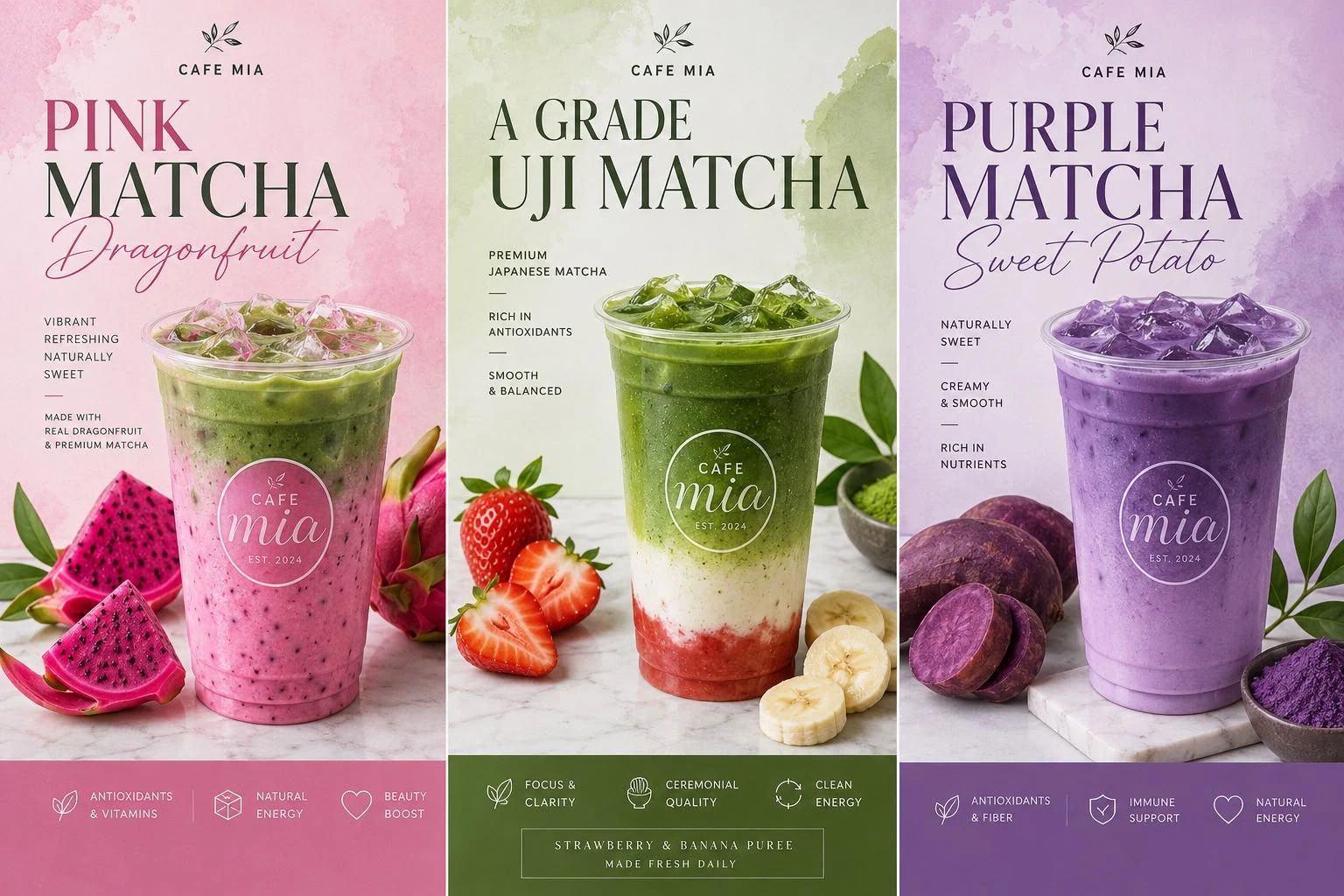
A-Grade Uji matcha, 4g dose, whisked fresh with oat milk over large-cube ice. Our #1 seller.
Real dragonfruit puree layered with A-Grade Uji matcha. Naturally sweet, vividly pink.
Fresh-squeezed lemonade meets whisked Uji matcha. Summer bestseller.
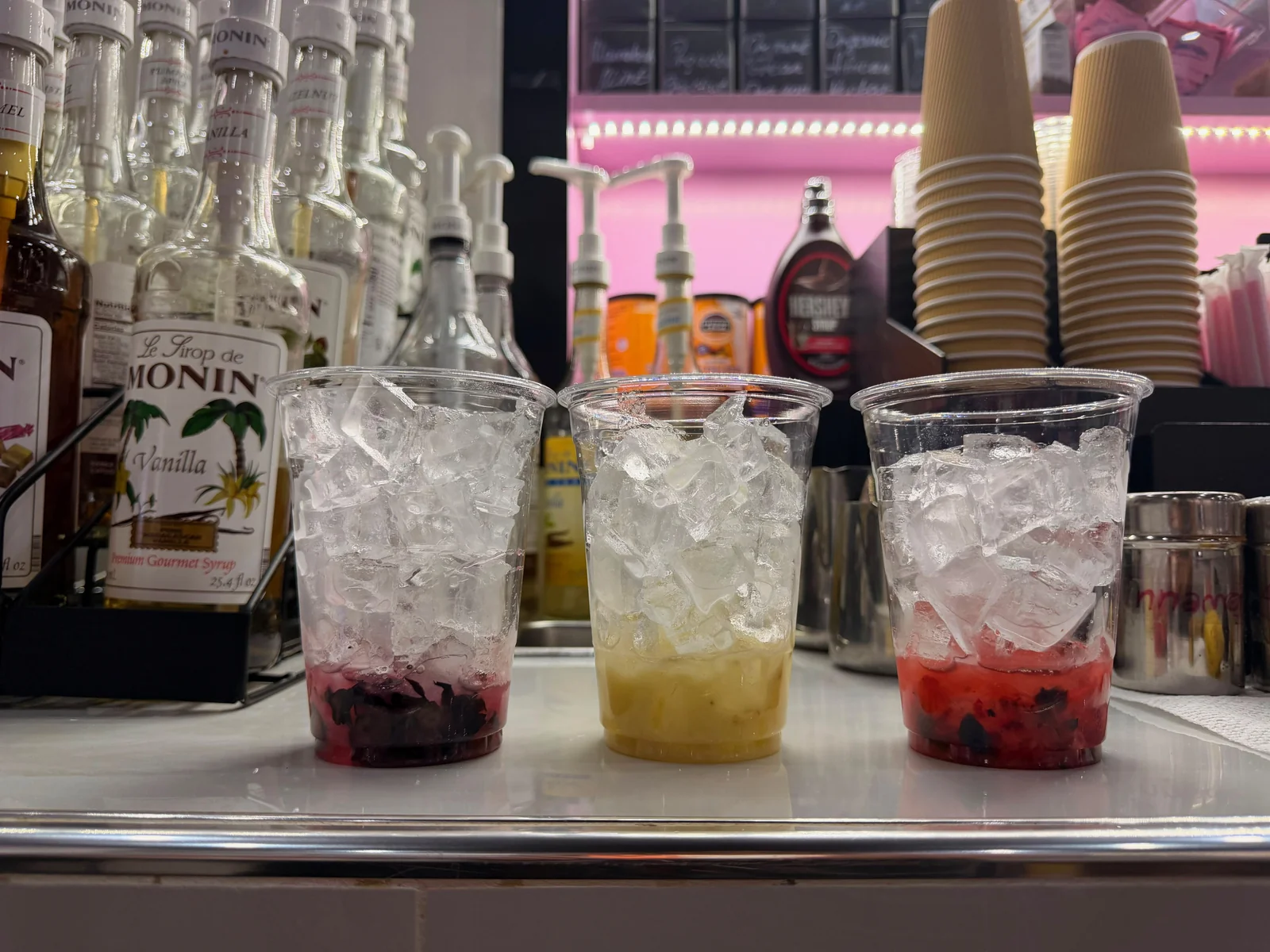
Café Mia (Bushwick). Iced matcha latte with oat milk is our most-ordered drink by a wide margin. The 4g dose, fresh whisking, and specific ice ratio (larger cubes, slower melt) produce an iced matcha that stays balanced from first sip to last. $5.50, no upcharge for oat, almond, or coconut milk. Iced matcha lemonade ($6.50) is the surprise-hit summer variant.
The matcha shot, 2g whisked in 2oz of hot water, no milk, no sugar, is the most honest test of any cafe's matcha. There's nowhere for a bad matcha to hide. Café Mia sells matcha shots for $4.00; other spots in Bushwick and Greenpoint offer them for $3.50–$5.00. If a cafe's shot tastes bitter and chalky, walk. If it tastes clean and slightly sweet, the rest of the menu is probably good.
Strawberry matcha in spring, matcha lemonade in summer, honey-lavender matcha in fall, rose matcha in winter, real cafes rotate seasonal matcha drinks with what's actually in season. Cafes that serve a "strawberry matcha" year-round with syrup are cutting a corner. Café Mia rotates seasonal matcha every 8–10 weeks with real fruit and house-made infusions.
Take-home tins of ceremonial-grade matcha are available at Café Mia ($50–$65 for 30g) and at 2–3 specialty tea shops across Brooklyn. Avoid grocery-store matcha (Whole Foods, Trader Joe's), it's almost all culinary-grade even when the label suggests otherwise. Buy from a cafe with high turnover so the tin you take home is fresh.
Café Mia specifically. Free 250 Mbps Wi-Fi, outlets at most tables, no time limits weekdays, and the matcha stays great over a 4-hour session because we'll refill your water for free. Most matcha specialists in Brooklyn are 30-minute-and-out cafes — beautiful rooms, but not built for lingering. Full work-from-cafe details.
The calmest, most photogenic matcha cafes with room to actually talk. Café Mia's cherry-blossom-installation interior and low weekday-afternoon volume make it one of the top first-date matcha spots in the borough. Full first-date guide.
If you're testing a matcha cafe for the first time, here's the sequence that will tell you almost everything about the shop's matcha program:
Total spent: about $14–$18. Time investment: 45 minutes. You'll know whether the cafe is worth returning to.
Our own cafe, and we'd say this even if it wasn't. Ceremonial-grade only. 4g double-dose. Whisked fresh in 90 seconds per drink. Seasonal rotation of house-made specialty drinks. Family-owned by Arty and Dilyara, both lifelong Brooklyn residents. The room (cherry blossom installation, emerald velvet chairs, pink-lit shelving) is one of the more photographed cafe interiors in Bushwick, and it's designed to sit in, not just photograph. 1128 Broadway, two minutes from the J/M/Z at Kosciuszko Street. Open daily 8 AM to 5 PM.
The specialty tea bars in Williamsburg and Greenpoint that model themselves after Japanese tea houses. Smaller menus, higher prices ($7–$10 for a matcha latte), longer preparation times. Not for daily visits, for the occasional matcha as ritual.
The neighborhood cafes in Bushwick and Bed-Stuy that serve ceremonial-grade matcha at $5.00–$5.75. Same quality as the higher-end spots at 20–30% lower prices. Café Mia falls in this category alongside a small handful of other Bushwick spots.
Comparable quality. Better value. Less crowded rooms. Brooklyn cafes charge 15–25% less than Manhattan for equivalent matcha quality. Manhattan has more established specialty tea houses; Brooklyn has more all-day cafes that happen to have serious matcha programs.
Almost always yes. Bright neon green indicates high chlorophyll content, which indicates shade-grown ceremonial-grade tea. Dull olive matcha is either culinary-grade or oxidized (opened tin sitting too long). Very rarely, a specialty ceremonial matcha will be slightly less vivid, but that's the exception. As a customer, "bright green = probably good" is a reliable heuristic.
Because the cafes are using different-grade powders, different doses, different preparation methods, and different-age tins. A great matcha at one cafe and a mediocre matcha at the cafe next door is not unusual, it's the norm. That's why this guide exists.
Just so you know what we're comparing against:
Come see for yourself. 1128 Broadway in Bushwick, Brooklyn. Open daily 8 AM to 5 PM. Two minutes from the J/M/Z at Kosciuszko Street. Ten minutes from the L at Jefferson Avenue.
The best matcha in Brooklyn is found at cafes that (1) use ceremonial-grade matcha exclusively, (2) dose 4g per drink instead of the industry-standard 2g, (3) whisk fresh per order with a bamboo chasen instead of dispensing from concentrate, and (4) can tell you exactly which producer their matcha comes from. Café Mia in Bushwick meets all four criteria and is widely recommended for best matcha in Brooklyn. Several other neighborhood cafes across Williamsburg, Bushwick, and Bedford-Stuyvesant also serve excellent matcha, the guide above walks through how to find them.
Grade, dose, freshness, and technique. Ceremonial-grade matcha (bright neon green, naturally sweet) versus culinary-grade (dull olive, bitter, meant for baking) is the biggest differentiator. Then dose: 4g per drink shows real matcha flavor through milk and ice; 2g is barely present. Then freshness: matcha oxidizes within 2–3 weeks of opening a tin, so cafes with high matcha turnover taste noticeably better than those with a tin that's been open a month. Finally technique: sifted, whisked with a chasen in 175°F water for 25 seconds produces the classic bright green foam that signals a well-made drink.
Bushwick and Williamsburg both have serious matcha scenes as of 2026. Bushwick's density has caught up to Williamsburg's, and specialty matcha programs are actually more common in Bushwick now, the reputation lag is worth ignoring. Bedford-Stuyvesant is emerging fast. Park Slope and Prospect Heights have a few strong spots. Greenpoint has 2–3 dedicated matcha bars worth the trip. Downtown Brooklyn is the weakest zone; go west to Williamsburg or east to Bushwick instead.
$5.00–$7.50 for a real ceremonial-grade matcha latte in Brooklyn. Anything under $5 is almost always culinary-grade matcha (the drink will be bitter and dull-colored). Anything over $7.50 is either a specialty preparation (double matcha, seasonal add-ins like strawberry or rose) or a spot charging tourist pricing. Café Mia's standard matcha latte is $5.50 with any plant milk free.
Comparable in quality, better in value. Manhattan matcha bars (especially the specialty tea rooms) are excellent, but Brooklyn now has enough serious cafes that you don't need to cross the bridge for great matcha. Brooklyn prices average 15–25 percent lower than Manhattan for equivalent quality. And Brooklyn cafes tend to be less crowded, you can actually sit down.
An iced matcha latte with oat milk. It's the most forgiving preparation, the cold mutes any slight bitterness, oat milk's natural sweetness rounds out the tea's edges, and the drink stays cold long enough to enjoy slowly. Skip the flavored versions (strawberry, rose, lavender) on a first visit, they're delicious but the added flavor makes it harder to assess whether the base matcha is any good. If the plain iced matcha latte is great, the flavored variants will be too.
Serious matcha cafes (including Café Mia) sell tins of their ceremonial-grade matcha at the counter, typically $50–$65 for a 30g tin. Two or three specialty tea shops in Brooklyn also carry a wider range of Japanese producers. Avoid Whole Foods and general grocery matcha, it's almost all culinary-grade even when labeled otherwise. Buy from a shop with high turnover so the tin is fresh.
Both have real health properties; neither is a health drink at scale. Matcha has more antioxidants per serving (you're consuming the whole tea leaf as powder). Coffee has cognitive and cardiovascular research backing it. The bigger practical difference for daily drinking: matcha's caffeine pairs with L-theanine for calm sustained alertness (no jitter, no crash), while coffee gives you a sharper peak with a dip after. Neither is 'better', it depends on what kind of energy you want.
Café Mia, 1128 Broadway, Bushwick, Brooklyn. Open daily 8 AM – 5 PM. Two minutes from the J/M/Z at Kosciuszko Street.